
The Tiny City in Your Pocket
By: EPRS Columnist

A city that never sleeps
Right now, there is a city in your pocket or your school bag. It is home to more than 15 billion workers. That is almost twice the number of people living on Earth. The workers never eat, never sleep and never complain. Yet they finish their jobs billions of times every second.
This city is the chip inside your smartphone. It is smaller than your fingernail. Every photo you snap, every song you stream and every message you send is handled by this tiny, busy city.
So how does it work? Let us take a walk through its streets.
Traffic lights by the billion
Every city needs traffic lights. Without them, cars would crash and nothing would move in order. The chip's traffic lights are called transistors, and they are its 15 billion workers.
A transistor has one simple job. It lets electricity through, or it stops it. Green light means "go", red light means "stop". Engineers write these two signals as 1 and 0. That is the secret language of every computer, from your phone to a space rocket.
One traffic light on its own is not very clever. But connect a few together and they can add two numbers. Connect millions and they can show a video. Connect billions and they can recognise your face when you unlock your phone. It is like one student holding up a coloured card. Alone, it means little. When thousands of students in a stadium raise their cards together, they form a giant picture.
These traffic lights are unbelievably small. Thousands of them could sit side by side across the width of a single strand of your hair.
Roads stacked like a highway interchange
Traffic lights are useless without roads. In the chip city, the roads are extremely thin lines of copper metal. They carry electrical signals from one transistor to the next.
A normal city spreads its roads across the ground. The chip city has no space for that. So it stacks its roads on top of each other, layer after layer, like a giant highway interchange. A modern chip can have more than ten levels of roads. Tiny vertical "lifts" connect one level to the next.
If you could pull out all these roads and lay them end to end, they would stretch for kilometres. Yet they are all packed into a space smaller than a postage stamp. Road planners in a busy city like Kuala Lumpur would be very jealous.
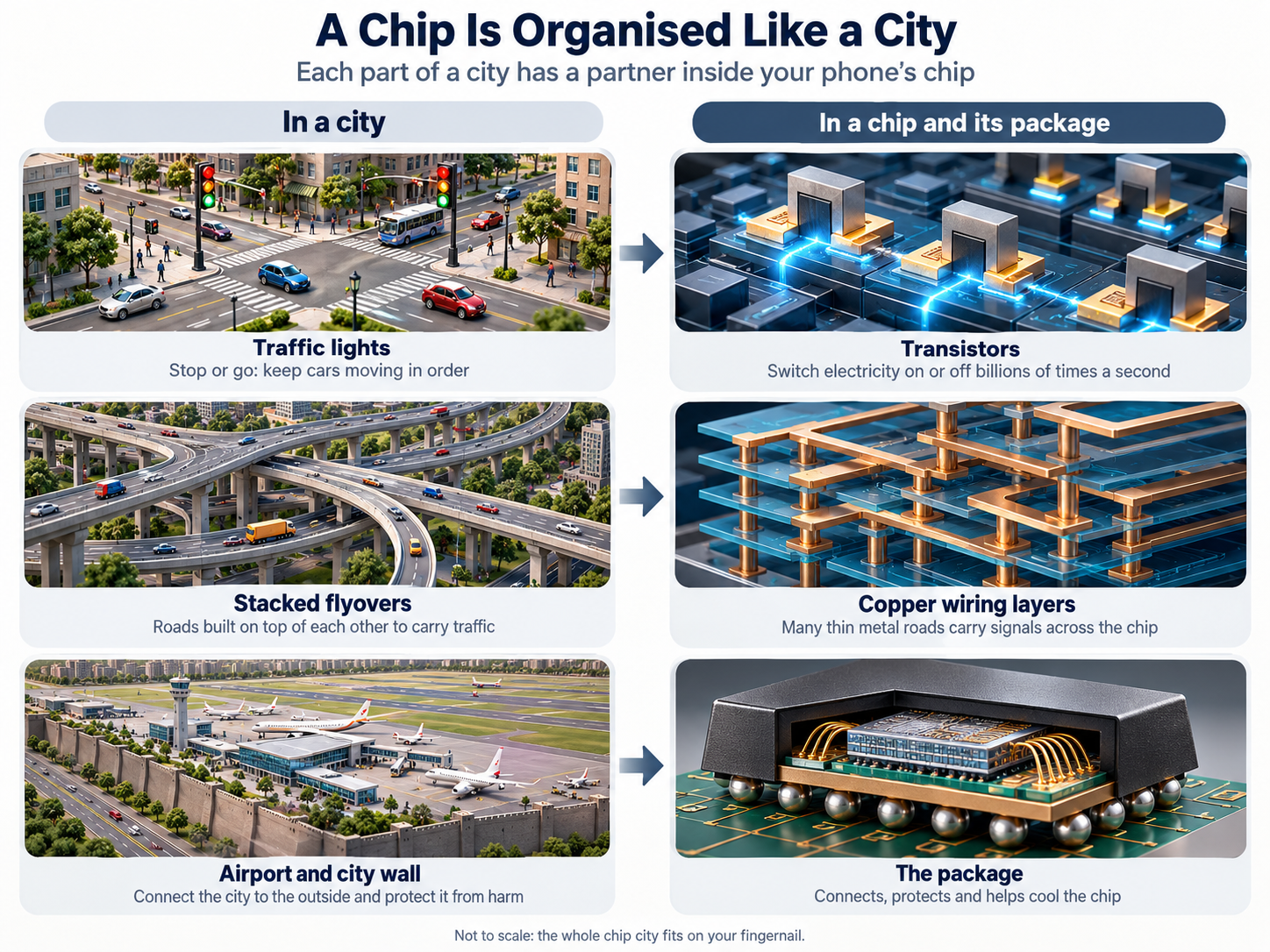
Figure 1: Every part of a city has a partner inside the chip in your phone.
The airport at the city gate
A city cannot survive alone. It needs food, water and visitors from outside, and it must send its goods to the world. That is why every city needs an airport, a port and highways.
The chip city has the same need. Its connection to the outside world is called the package. Many people never notice it, but it is the unsung hero of electronics.
The package does three important jobs.
It is the airport. Thousands of tiny metal bumps, called solder joints, act like runways. They carry signals and power between the chip and the rest of the phone.
It is the city wall. The chip itself is as delicate as thin glass. The package protects it from moisture, dust and the knocks of daily life, including when your phone falls off the table.
It is the cooling system. A busy city gets hot, and so does a busy chip. The package helps carry heat away so the city does not "overheat" and slow down.
Here is a fact to be proud of: Malaysia is one of the world's major centres for chip packaging and testing. Many of the chips you use, and that people use around the world, may have passed through a factory in our country.
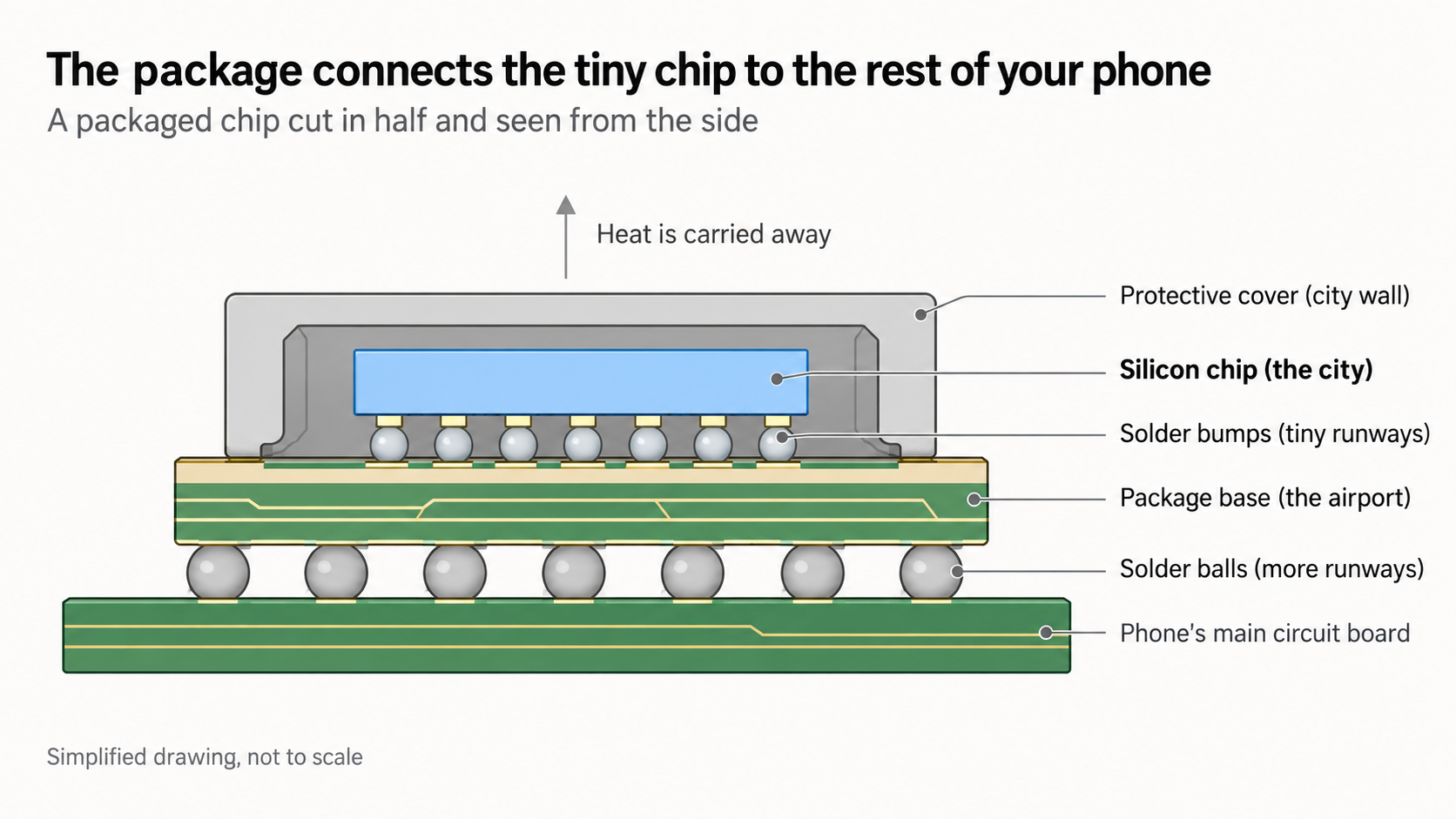
Figure 2: The package links the tiny chip to the rest of your phone, protects it and helps keep it cool.
Where the city picture breaks down
Every comparison has its limits, and good scientists always say where theirs stop.
Real traffic lights change every minute or so. A transistor can switch billions of times in one second. Real roads carry cars that you can see. The chip's roads carry electrical signals that move almost as fast as light. And a real city grows slowly, building by building, over hundreds of years. A chip city is built all at once, in a factory cleaner than a hospital operating theatre, with patterns printed using light.
So the city picture helps us understand the idea, but the real thing is even more amazing.
Who builds the tiny cities?
A real city needs many kinds of people: planners who design it, builders who construct it, inspectors who check it is safe, and maintenance crews who keep it running for years. The chip city is exactly the same.
Chip designers are the city planners. They decide where every traffic light and road should go. Process engineers are the builders who make the chips in the factory. Packaging engineers build the airports and city walls. Reliability engineers are the inspectors, testing whether the city will survive heat, cold, shaking and years of daily use. Behind them are technicians, chemists, physicists and computer scientists, all working together.
These tiny cities now run our hospitals, cars, banks, farms and classrooms. They help doctors find disease early and help farmers check their crops from a phone. As our world becomes more connected, we will need many more city builders.
So the next time you pick up your phone, pause for a second. Remember the 15 billion workers inside, the stacked highways and the busy airport at the city gate. Then ask yourself one question: one day, could I be one of the people who builds the next tiny city?
Did you know? The first transistor, made in 1947, was about the size of your palm. Today, billions of them fit on a chip smaller than your fingernail.